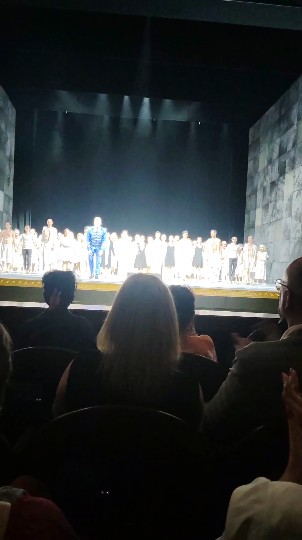
Samedi 12 Avril 2025
-
Conductor
-
Faust
-
Méphistophélès
-
Valentin
-
Wagner
-
Marguerite
-
Siebel
-
Marthe
-
Dancers
-
Featuring the Hungarian State Opera Orchestra and Chorus
Synopsis
Act I – Prelude
In the hours before dawn, the aging scholar Faust is sitting alone in his study grimly confronting the realisation that his life’s search has been in vain: the secrets of the world still remain a mystery to him. In despair, he decides to take poison and put an end to his life. But then he hears the sound of men and women on their way to work, singing praise to God for his gifts of nature. « But what can this God do for me? Can he give me back my love, youth and faith? » Faust curses earthly happiness, science and faith and invokes Satan. Méphistophélès appears, ready to provide wealth, glory and power. But what Faust wants is youth. Méphistophélès will fulfil the scholar’s wish, but with one condition: just as he now serves Faust, Faust will later serve him down below. He displays a picture of Marguerite, the ideal woman, which immediately throws the ageing scholar into a state of excitement. Faust agrees to the deal, and in the wink of an eye is transformed into an elegant, young gentleman.
Synopsis
Acte I – Prélude
À l’aube, Faust, un érudit vieillissant, est assis seul dans son bureau, l’air sombre, face à la réalité : les recherches de sa vie ont été vaines : les secrets du monde demeurent un mystère pour lui. Désespéré, il décide de s’empoisonner et de mettre fin à ses jours. Mais il entend alors le bruit d’hommes et de femmes se rendant au travail, chantant des louanges à Dieu pour les dons de la nature. « Mais que peut ce Dieu pour moi ? Peut-il me rendre mon amour, ma jeunesse et ma foi ? » Faust maudit le bonheur terrestre, la science et la foi, et invoque Satan. Méphistophélès apparaît, prêt à lui offrir richesse, gloire et pouvoir. Mais ce que Faust désire, c’est la jeunesse. Méphistophélès exaucera le vœu de l’érudit, mais à une condition : de même qu’il sert Faust, Faust le servira plus tard en bas. Il lui montre un portrait de Marguerite, la femme idéale, ce qui plonge immédiatement le vieil érudit dans un état d’excitation extrême. Faust accepte le marché et, en un clin d’œil, se transforme en un jeune gentleman élégant.
Act II – Carnival
An the inn of the city during carnival. Men and women bid farewell to the soldiers departing for war, whose numbers include Valentin, Marguerite’s older brother. The girl presents her sibling with a medallion to protect him in battle. Valentin, on the other hand, is worried about his little sister, since there is no-one else aside from himself to look after the girl. Siebel, who can hardly keep his love for Marguerite concealed, volunteers for the task. Wagner attempts to keep the pleasant mood going: he starts to sing, but then is interrupted by an unknown figure – Méphistophélès – who also performs a song for the company, one about the Golden Calf, at whose feet lie rich and poor alike and which makes a mockery of God. The song wins the group’s approval, but the stranger acts in an increasingly strange and unsettling fashion: he prophesies misfortune for some, and conjures up wine. When he raises his glass to toast Marguerite, Valentin angrily draws his sword, only to watch its steel blade shatter in the air. Forming the broken weapon into the sign of the cross, he attempts to hold back the amused demon, and then departs. Faust gives Méphistophélès a command: he would like to see Marguerite again. The girl then appears in the crowd and demurely declines Faust’s advances. The crowd waltzes ecstatically.
Acte II – Carnaval
Dans une auberge de la ville, pendant le carnaval, hommes et femmes font leurs adieux aux soldats qui partent à la guerre, parmi lesquels Valentin, le frère aîné de Marguerite. La jeune fille offre à son frère un médaillon pour le protéger au combat. Valentin, quant à lui, s’inquiète pour sa petite sœur, car il n’y a personne d’autre que lui pour veiller sur elle. Siebel, qui peine à cacher son amour pour Marguerite, se porte volontaire. Wagner tente de maintenir l’ambiance : il commence à chanter, mais il est interrompu par un inconnu – Méphistophélès – qui interprète également un chant pour la troupe, celui du Veau d’or, aux pieds duquel reposent riches et pauvres, et qui se moque de Dieu. Le chant remporte l’approbation du groupe, mais l’inconnu agit de manière de plus en plus étrange et troublante : il prédit le malheur à certains et invoque le vin. Lorsqu’il lève son verre pour trinquer à Marguerite, Valentin dégaine son épée avec colère, mais voit sa lame d’acier se briser dans les airs. Façonnant l’arme brisée en signe de croix, il tente de retenir le démon amusé, puis s’en va. Faust donne un ordre à Méphistophélès : il aimerait revoir Marguerite. La jeune fille apparaît alors dans la foule et décline pudiquement les avances de Faust. La foule valse en extase.
Act III – The Garden
Pining for Marguerite, Siebel attempts to endear himself to her by bringing flowers, but as Méphistophélès foretold, every last blossom withers in his hands. The curse is only lifted after the boy dips his hands in holy water. Finally he leaves bouquet in the garden as a token of love for Marguerite. Méphistophélès and Faust arrive. The demonic servant leaves his master to find a costly courtship gift and soon returns with a jewellery box. Faust, who moments earlier had been walking love-smitten through the garden of his beloved, now wants to flee. Méphistophélès places the box where the girl can find it. Marguerite soon arrives, daydreaming about the elegant gentleman she had turned down not long ago… She sings from a ballad about the king of Thule, but loses the thread of her song. Finally, she notice Siebel’s bouquet, and then also finds the jewellery box, and is unable to resist the temptation to try on a couple pieces of jewellery. As she is doing so, she is found by Marthe, who is convinced that it can be nothing other than a gift for Marguerite from a wealthy suitor. Méphistophélès appears with Faust beside him and attempts to distract Marthe with his own wooing so that Faust and Marguerite can be alone together. The shy girl slowly tells Faust about her fate: her brother is a soldier, and her mother and little sister are dead. Her courage soon vanishes, and she runs off. Méphistophél?s is at last free from the Marthe, who has showed excessive interest in him, and requests that Love and the Night soften Marguerite’s heart with enchantment. The girl returns, followed by Faust. She attempts to resist the man, but is gradually overcome by feelings of love. At last she promises Faust that she will be his the next day.
Act IV – The church; Valentin’s death
Faust has left Marguerite with child. The girl goes to the church to pray, but a terrifying, accusatory voice – Méphistophélès’s voice – curses the girl and sends her into the madness of despair.
Meanwhile Valentin returns home from the war and greets Siebel happily. Searching for his sister, he hurries into the house. Shame drives Faust back to Marguerite’s house. Méphistophélès starts into a mocking serenade, at which point Valentin, who has been informed by Siebel what happened in his absence, burst out of the house in a rage: he challenges the man who has dishonoured his sister to a duel. With help from Méphistophélès, Faust vanquishes Valentin and flees. Marguerite and the townsmen hurry to the mortally wounded Valentin, who curses his sister before expiring.
Act V – Walpurgis Night; Prison
Méphistophélès has taken Faust to the Harz Mountains, where Walpurgis Night is being celebrated by the queens and courtesans of the ages. Faust wants nothing more than to forget everything and lose himself in pleasures. Then Marguerite’s spirit appears to him. Frightened at first, Faust immediately wants to see the girl. Méphistophélès takes Faust to Marguerite in prison, where she awaits execution for killing her child. Faust begs Marguerite to escape with them, but the girl will have none of it: even insane, she is not willing to follow Méphistophélès anywhere. She implores God for forgiveness, offering herself to him. Slowly the sun rises. Faust and Méphistophélès depart.
Apotheosis
As bells ring for Easter, Marguerite’s soul ascends to heaven. A celestial chorus gives praise to God.









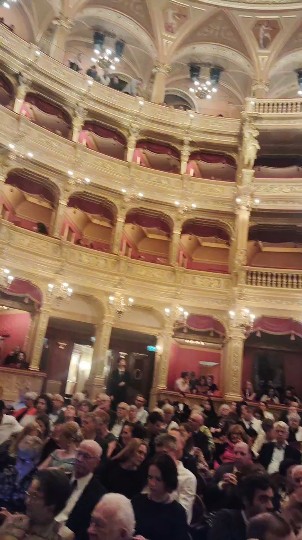


Entre acte